Review – Team Associated RC10GT2 RS RTR
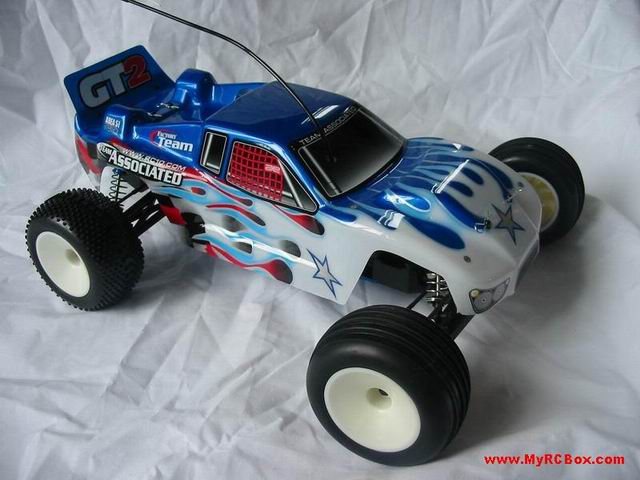
A few months ago, Team Associated introduced their new RC10GT2 Factory Team gas truck. Racers from all around the world were waiting impatiently for the new gas truck. Thirteen years after the original release of the RC10GT in 1993, the A-Team redesigned the legendary best-selling and winning truck.
The first time I saw the new GT2, I remembered my first RC10GT, a black tub chassis powered by an OS .12 CZ. I had a lot of fun driving this truck. I sold the GT and got a new one with the blue aluminum chassis, and I never stopped having a blast driving it. For many years, the RC10GT was the only RC I had. The RC10GT was my first nitro truck, and since day #1, I have always owned an RC10GT.
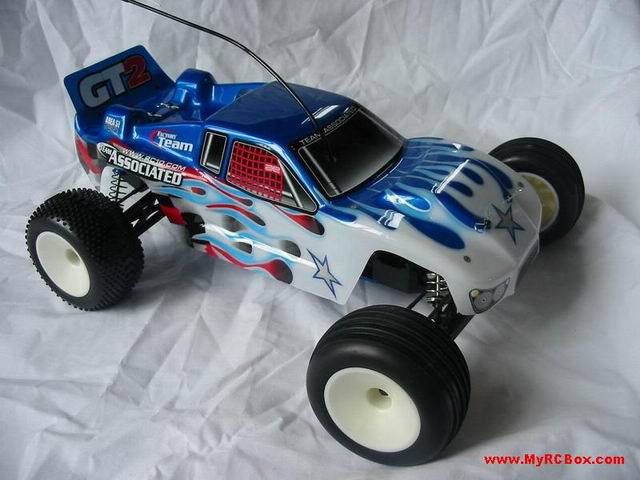
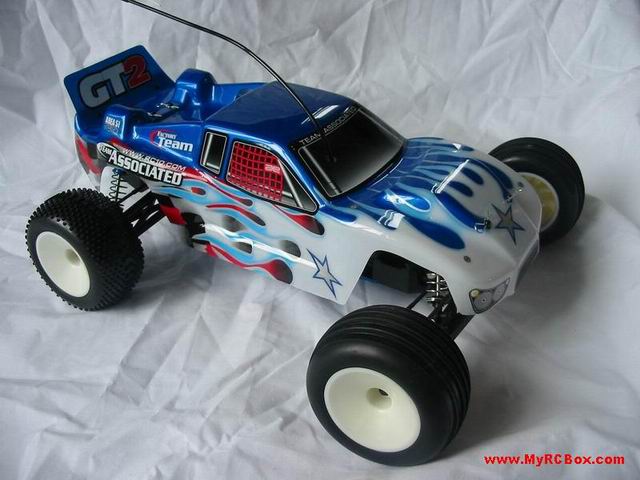
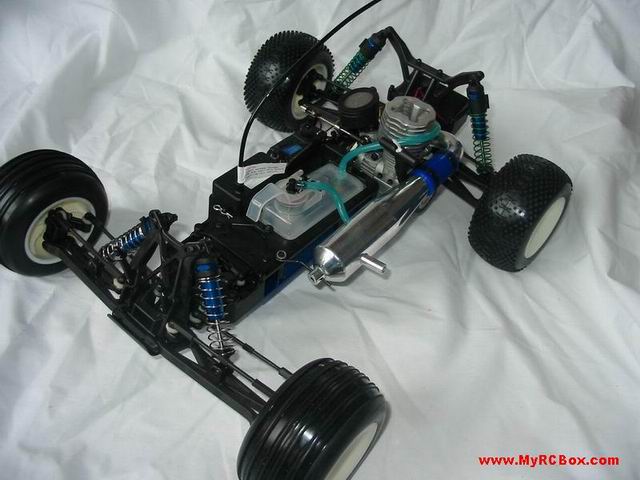
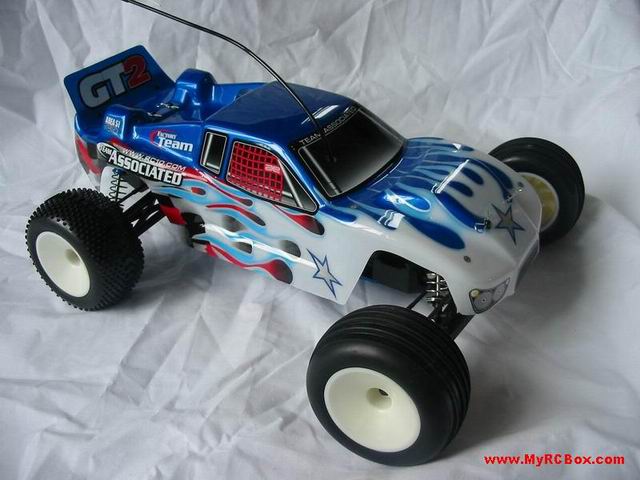
Now Team Associated offers the famous GT2 in an RTR package. The RC10GT2 RS RTR comes fully equipped; you just need to add batteries and fuel. An incredible-looking body with Tebo's paint scheme tops the truck.
Electronics
All electronic components are Team Associated standard equipment that can be found in all of their RTR vehicles. The 2-channel Ace Jaguar XP2 transmitter has a plastic-look reputation but offers many nice features like dual-rate steering, throttle/steering trims, and end-point adjustments. As far as I'm concerned, this transmitter is reliable and has a good range.
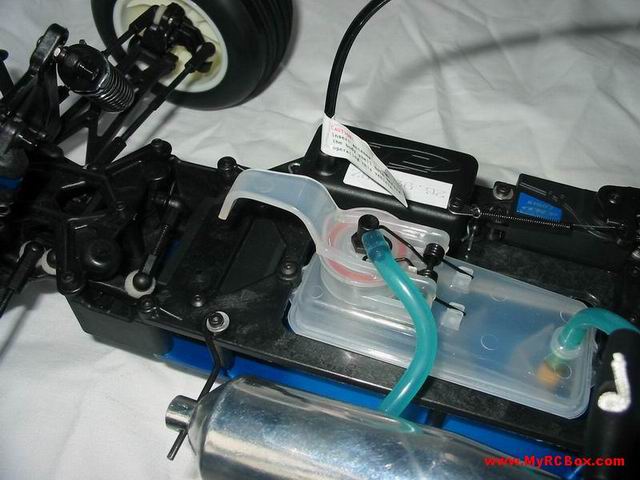
The Team Associated S1903MG steering servo is metal-geared, with good torque and speed to keep the GT2's front wheels pointed where you want them in any circumstance. The throttle/brake servo (Team Associated S1903) is a standard servo that has good torque and speed for the brake/throttle duties.
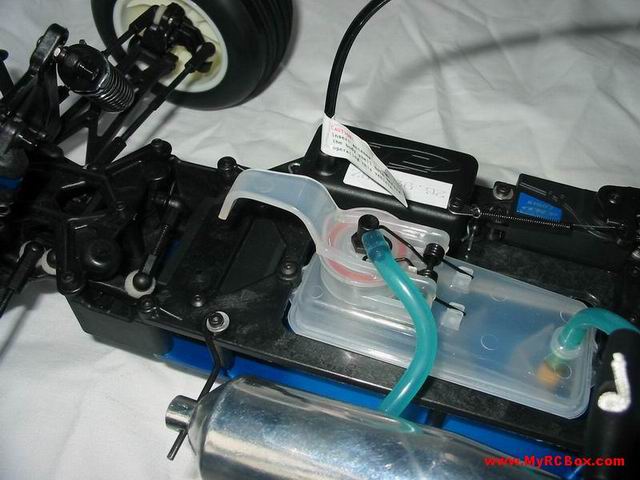
A throttle return spring will save your ride in case of an unexpected runaway if you forget to charge your receiver's batteries! The battery pack is now in an enclosed battery box, and the receiver is also located in an enclosed box. No more zip ties!
Chassis, body and tires
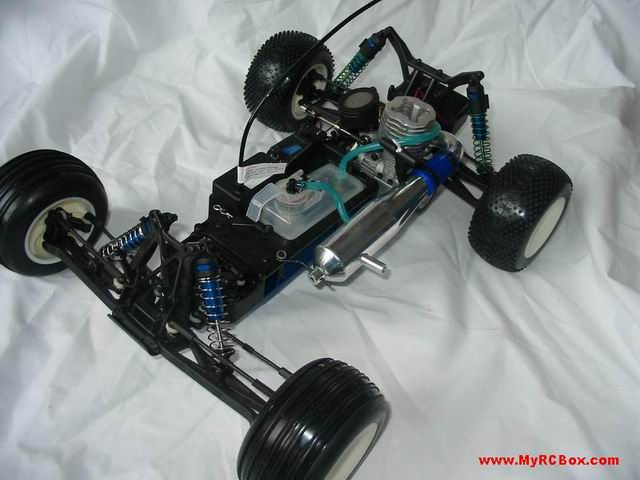
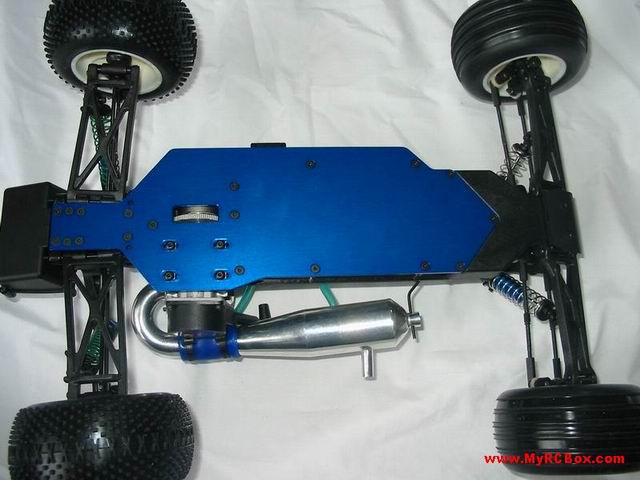
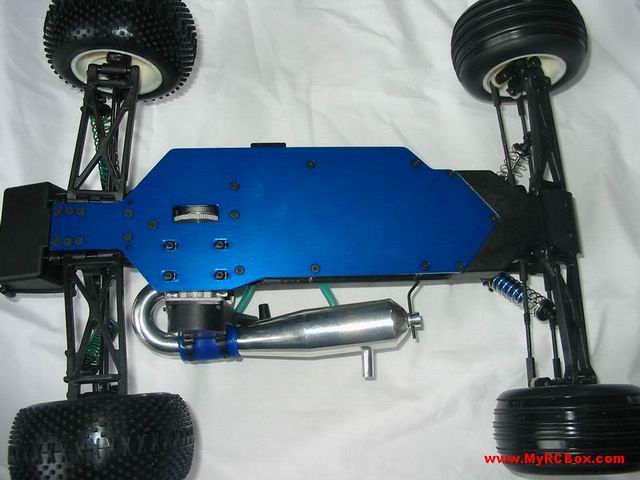
All of the GT2's vital components are attached to a 3mm 6061 blue-anodized aluminum chassis. A molded composite upper deck tops the chassis. This makes a very rigid platform. The fuel tank is 82cc, but a factory-installed compensator reduces the capacity to the ROAR-legal 75cc. An enclosed receiver box protects your electronics, and another enclosed box located at the rear end protects the battery pack. The ON/OFF switch is located on the side of the truck and is easy to reach.
An awesome Tebo-inspired paint scheme now tops the GT2 RTR. It is offered in two colors, white or blue. The body sits low and gives a nice, sleek look to the truck. Unfortunately, there are no venting holes cut from the factory.
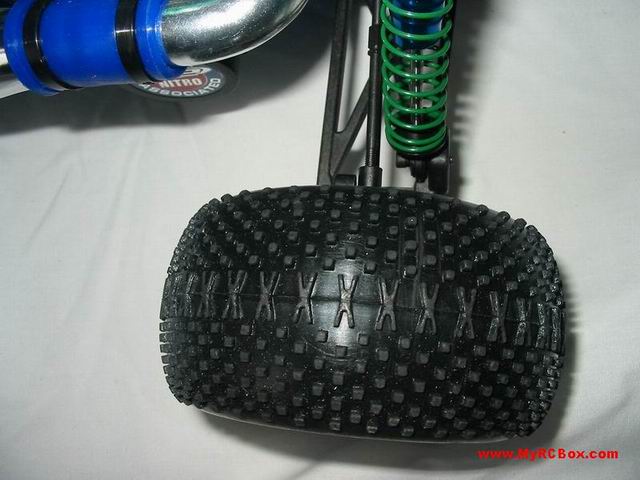
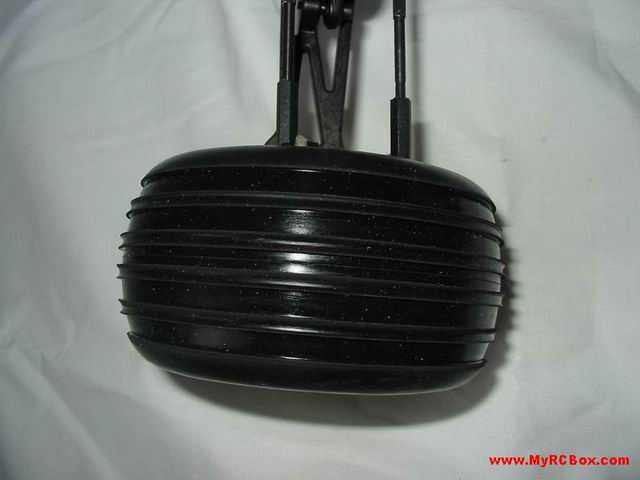
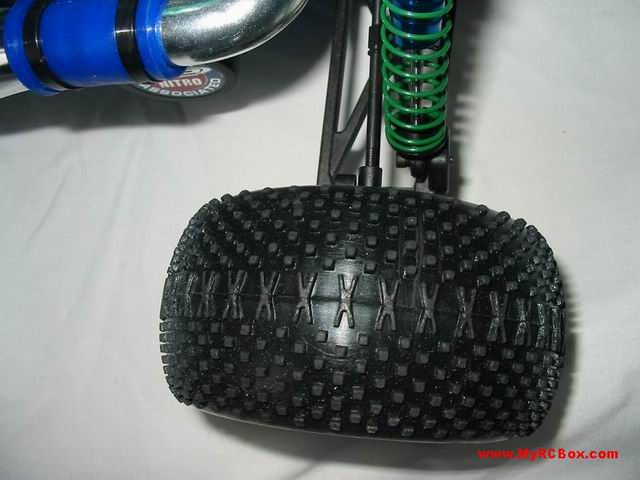
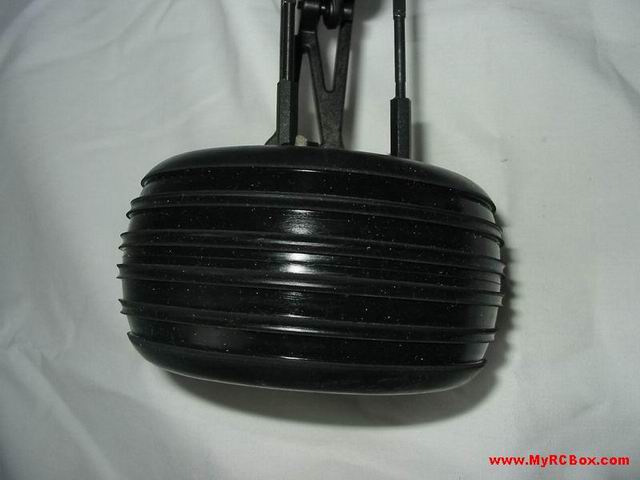
You'll have to make a hole in the windshield and in the driver's window. All four tires are mounted on white dish wheels. The front tires are ribbed and are good for bashing and for racing. The rear tires are better for bashing or for getting familiar with the GT2, but they are a bit hard for racing. They are not bad race tires, but if you want to race, get some Pro-Line Bowties or Snake Eyes.
Suspension and steering
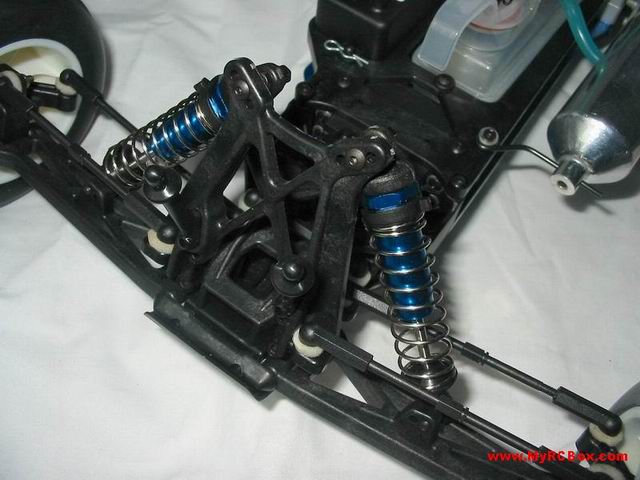
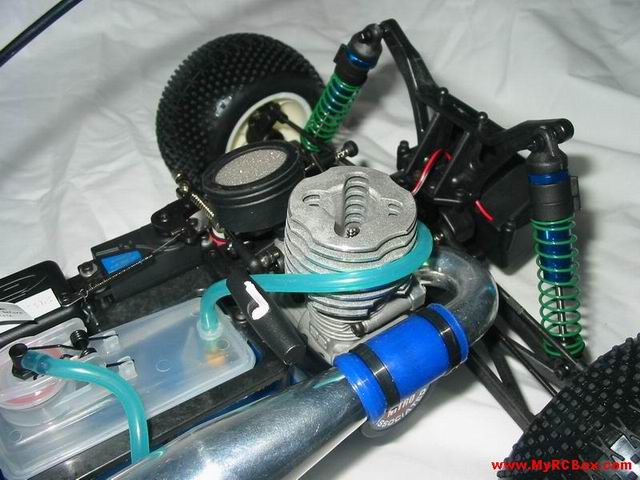
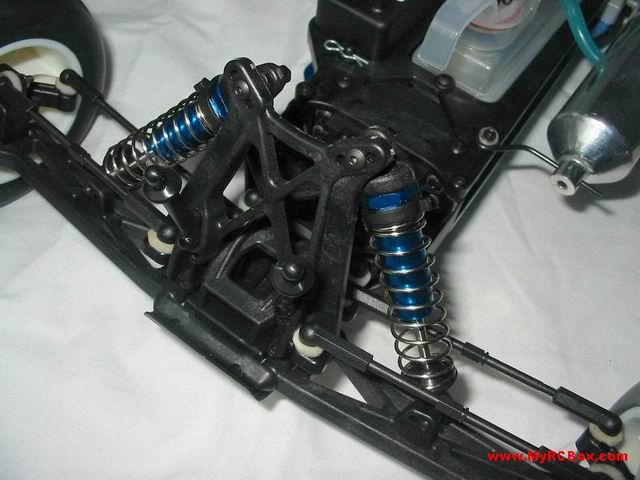
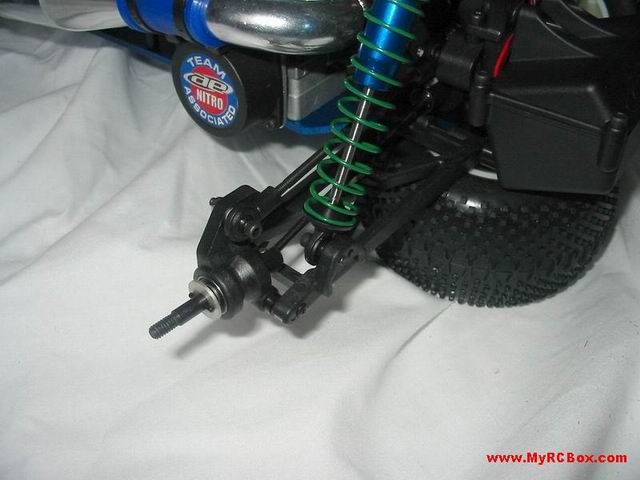
One of the first things I noticed when I dropped the GT2 on my table is how smooth the suspension is. Right out of the box, the GT2's suspension seems to be tuned perfectly. Even after I compressed the front and the rear suspension many times, the suspension arms always went back to their bone-level position. The blue-anodized aluminum shocks are also standard AE equipment found on many RTRs. They are the same as those on the previous RC10GT. Green springs are used for the rear, while silver springs are used for the front shocks. This is a well-known shock/spring setup. I used it for many years. In fact, I'm not the only one to use this spring combo. Have a look at AE's website in the setup sheets section, and you'll notice that it's a common shock setup. The aluminum shocks don't just look nice; they also offer consistent damping and will resist any impact. According to AE, 35wt shock oil is used for the front shocks and 30wt for the rear ones. The ride height is easily adjusted by adding or removing preload clips. Upper links are used on all four corners to adjust camber.
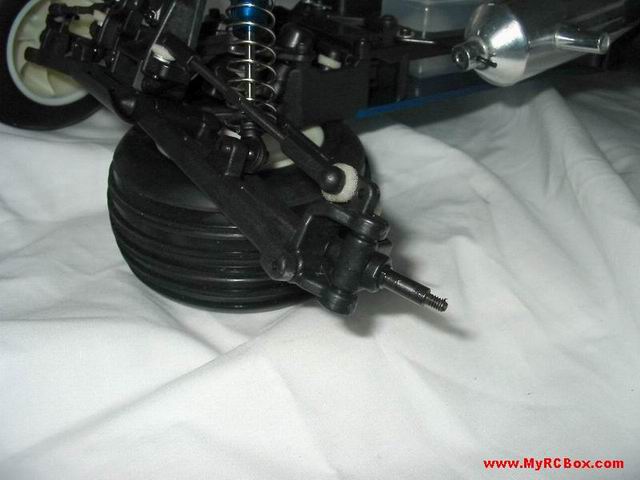
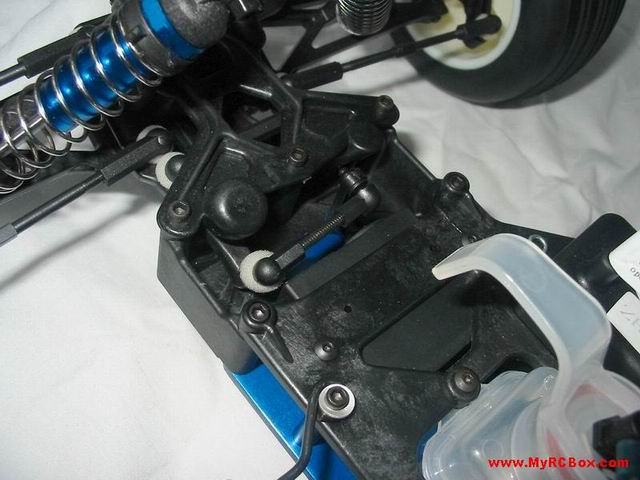
In the steering department, the GT2 RTR shares many components with the RC10T4. The design of the GT2's steering is very similar, not to say identical, to what we find on the T4. A dual bellcrank with an integrated servo saver is used, and two Ackerman positions are available. To eliminate the bump steer effect when the front suspension is compressed, the bellcranks and the caster angles are the same. All hinge pins are now captured — no more e-clips, which is good news.
Drivetrain
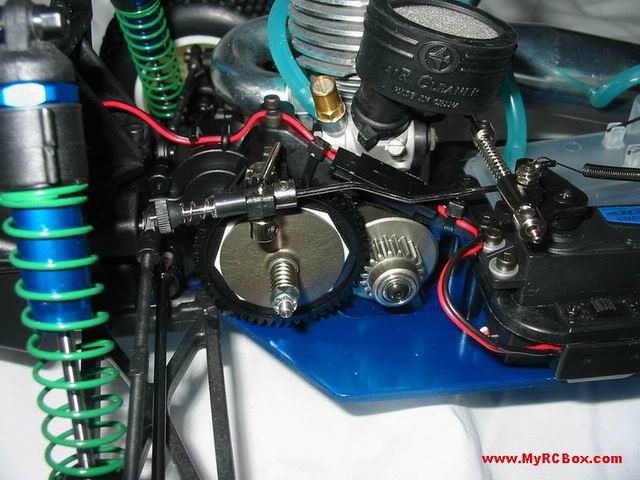
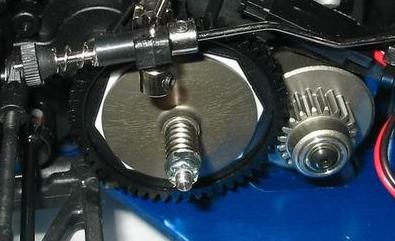
The entire drivetrain is new, with the exception of the dogbones. The slipper clutch is identical to what we found on the T4/B4 and uses dual slipper pads for fine tuning and to protect the whole drivetrain. The transmission is a completely new design and is compact to lower the GT2's CG.
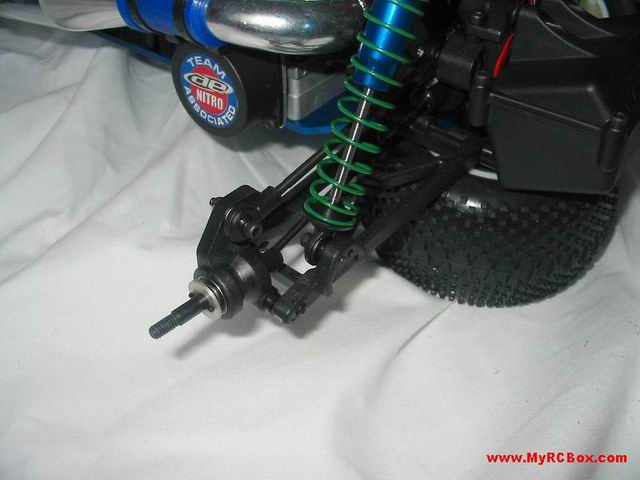
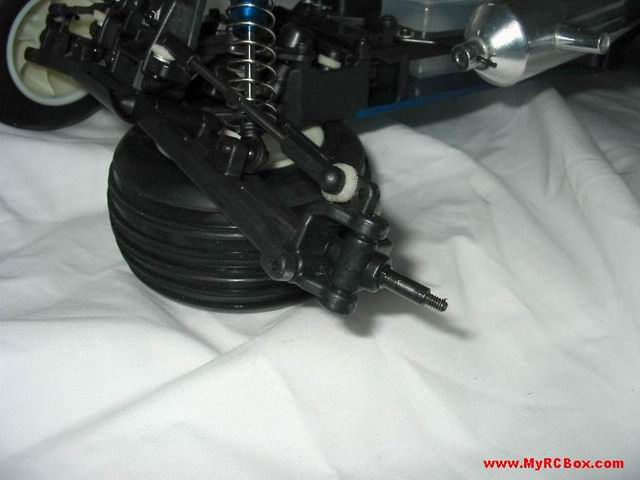
Two clutch shoes (derived from the Nitro TC3) transfer the power to the 20T clutch bell. The transmission's internal ratio is 4.09:1, for a final ratio of 11.043:1, which gives the GT2 great acceleration. The rear hub carriers now use extra-big 3/16" x 1/2" external bearings to support the axle. This will prevent wear, and the bearings will last longer. To stop the GT2, a fiber disk brake is squeezed in a metal caliper. You can quickly adjust the brake with a thumb screw.
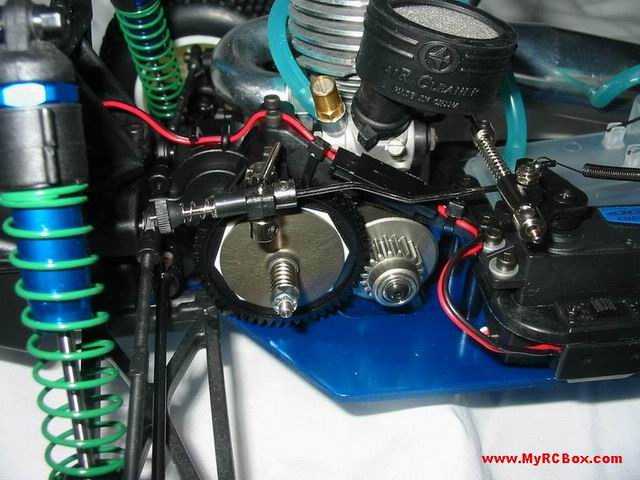
I'd like to see CVDs instead of dogbones, but to keep the price tag low, AE cut in the right place. I prefer to have a great truck with dogbones rather than a truck with fragile plastic and CVDs. Anyway, that's just me. You can buy CVDs later; they are not expensive.
Engine and tuned pipe
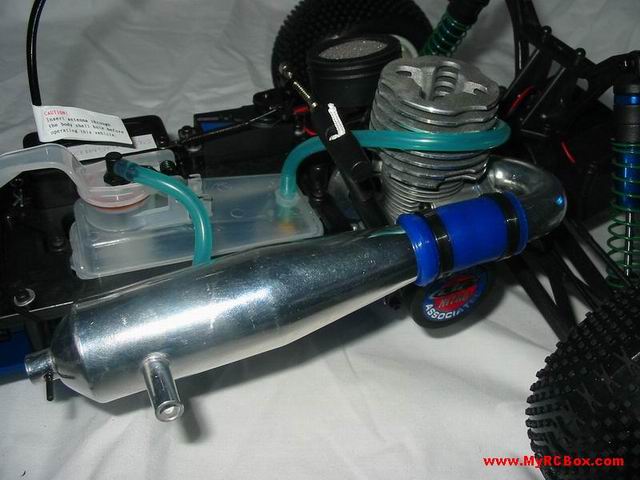
The GT2 RS RTR comes equipped with the same engine and tuned pipe combo as the RC10GT RTR. The Thunder Tiger .15X engine is ABC-constructed, is easy to break in, easy to tune, reliable, and produces enough power to easily push the GT2 to 35+ MPH.
It's a perfect engine for any newcomer. A carb restrictor is factory-installed to make the GT2 easier to drive and to help you get familiar with the truck. If you need more top speed and power, just remove the carb restrictor to get a few more MPH.
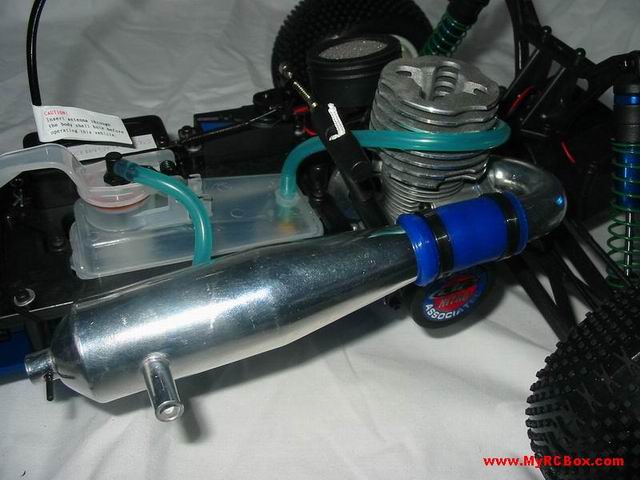
The rotary carb will hold its settings run after run and doesn't need frequent adjustment. I have always had great success with the Thunder Tiger engines found in AE's RTRs, and this one is no exception. With proper maintenance, this engine will last many gallons. Contrary to the Factory Team version, the RTR uses a side-exhaust engine. A nice polished header and tuned pipe are used and produce a nice sound with good torque and top speed.
What I liked
- Raceable and competitive out of the box.
- Engine runs strong and is easy to tune.
- A bunch of Factory Team parts available.
- Incredible paint scheme.
- Enclosed receiver and battery boxes.
What could be improved
- No CVDs.
- No venting holes in the body.
Conclusion
The RC10GT2 RTR is a great nitro stadium truck for any newcomer, but don't let the fact that it's an RTR fool you. The RC10GT2 RS RTR can be raced and can have great success right out of the box. Just add rear racing tires and you're ready for serious track action.
At first, I wanted a GT2 Factory Team with an LRP .12 engine, but my budget is limited, so I decided to go with the RTR version ($285 US street price). I'm sure I won't regret my choice. Later, I can upgrade my GT2 RTR with any Factory Team parts.
It's not an easy job to redesign a truck that won ALL of the ROAR National gas truck championships, received a bunch of awards from magazines, and won a lot of races from backyards to the major events. All the folks at Team Associated did a great job redesigning the GT. Jared Tebo proved that the new GT2 is still a champion by winning the 2006 ROAR title with his GT2 FT. I'm sure we will continue to say, "You still can't beat a GT... 2!"
For more information, visit www.teamassociated.com
Related posts
Review – Thunder Tiger ST-1
On September 21st, the postman called me… There was a parcel for me from the USA… California (I wish I…
Pro-Line Blockade 2.2” Rear Buggy tires review
With a 2WD buggy, having the right tires for the right track surface is paramount. Without traction, your buggy will…