Why coding a small app might be the best thing for your anxiety
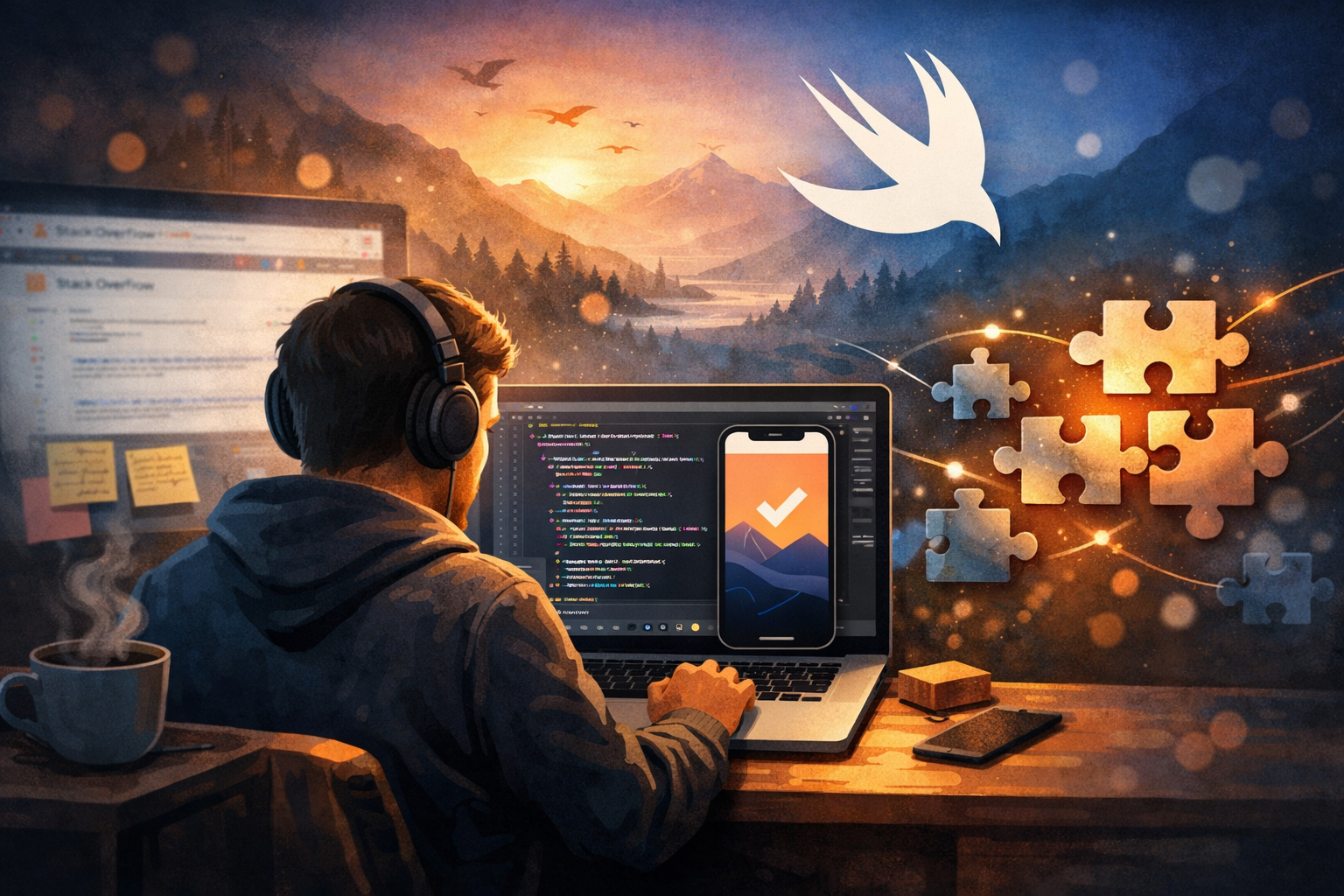
There's a peculiar kind of calm that settles in when you're deep in a Xcode project, tracking down why a SwiftUI view isn't updating the way you expect. It's not the absence of stress — it's a different kind of focus altogether. For many developers, the act of building apps isn't just a career or a side hustle. It's a surprisingly effective tool for managing anxiety.
This might sound counterintuitive. Coding is often associated with frustration, imposter syndrome, and the endless scroll of Stack Overflow threads at midnight. But beneath that surface, app development has a structure that the anxious mind genuinely craves.
Problems with edges
Anxiety thrives in ambiguity. The worried mind loops over open-ended threats: vague social fears, formless what-ifs, futures that can't be solved. What makes coding unusual as an activity is that its problems have edges. A bug either exists or it doesn't. A function either compiles or it doesn't. That definiteness is deeply soothing for a brain otherwise stuck in fog.
When you're working on an app — even a small utility — every task you tackle has a visible boundary. You add a feature, it works, you move on. The feedback loop is tight and concrete. For people whose anxiety manifests as rumination or a sense of helplessness, completing even a tiny coding task delivers a quiet but real sense of agency.
Flow, not distraction
There's an important distinction between distraction and flow. Scrolling social media to escape anxiety is distraction — the discomfort is still there, just temporarily masked. Coding, when it clicks, produces something closer to flow: a state where attention is fully absorbed by a meaningful, calibrated challenge.
Psychologist Mihaly Csikszentmihalyi described flow as occurring when the difficulty of a task closely matches your skill level — hard enough to be engaging, achievable enough to avoid panic. App development is naturally structured this way. You start with a tutorial. You graduate to your own project. You hit a wall, search for solutions, break through. The progression is built into the craft.
This matters for anxiety specifically because flow interrupts the default mode network — the part of the brain responsible for self-referential thinking, worry, and rumination. You can't simultaneously be in flow and spiraling. The two states compete, and flow wins.
The satisfaction of making something real
Many forms of anxiety are rooted in a sense of passivity — the feeling that things happen to you rather than because of you. Shipping even a small app, or reaching the end of a development session with something tangible to show for it, pushes back against that feeling in a concrete way.
This is partly why indie app development has attracted so many people who describe themselves as anxious or introverted. It's creative work that doesn't require a room full of people. The feedback is visible. The control is yours. You decide what to build, when to build it, and what done looks like.
There's also something almost meditative about the iterative nature of coding: write, test, fix, repeat. It's structured repetition with a goal, which is precisely the kind of activity that occupational therapists and CBT practitioners recommend for anxiety management — not as a cure, but as a reliable tool for regulation.
Starting small is the whole point
The barrier to entry matters here. If building an app felt like constructing a skyscraper, it would produce anxiety rather than relieve it. But the iOS ecosystem today makes it genuinely possible to build something useful in a weekend. A timer. A habit tracker. A simple note tool. The scope doesn't need to be ambitious.
In fact, starting small is the point. One of the cognitive patterns that sustains anxiety is catastrophizing — treating every task as if it carries enormous stakes. Choosing a tiny, low-stakes app project is almost a deliberate therapeutic choice: you're practicing the skill of starting without needing the outcome to matter enormously.
And often, unexpectedly, that small project becomes something you ship. And then the next one is easier to start.
It's not a cure — but it's real
None of this replaces therapy, medication, or professional support for people dealing with clinical anxiety. But for the everyday texture of anxious thinking — the background hum of worry, the restlessness, the need for something to do — app development offers something genuine: a structured, creative, achievable challenge that engages the mind, produces results, and gives you something to point to and say, I made that.
If you've been circling a project idea for months and never started because it felt too uncertain, too small, or too unlikely to matter — that hesitation is the anxiety talking. Open a new Xcode project. Name it something. Write the first view.
The quiet that follows might surprise you.
You should also read:
What Is Vibe Coding?
Vibe Coding: When Intuition Meets Development There's a shift happening in how we think about writing code. While traditional software development emphasizes rigorous planning, detailed specifications, and methodical execution, a different approach has been gaining traction—one that developers are calling "vibe coding." Vibe coding is…
Continue reading...
How I’ve reduced my anxiety and my stress through programming
Programming allows me to reduce my anxiety, to reduce my stress, and to calm the little hamster that runs into my head. In 2016, depression, stress, and generalized anxiety disorders were manifested in my life. From then on, my life turned into a kind…
Continue reading...